Exploring Montaña de Oro State Park s hidden coastal wonders
Table of Contents
Nestled along California s rugged central coast, Montaña de Oro State Park emerges as a pristine sanctuary where golden dunes meet crashing waves and rare ecosystems thrive undisturbed. Stretching between Morro Bay and San Luis Obispo, this 2,300-acre jewel preserves some of the last intact coastal habitats in the region, offering hikers, scientists, and nature enthusiasts a rare glimpse into a landscape shaped by millennia of Indigenous stewardship and fierce ocean forces. Unlike its more famous counterparts like Big Sur or Torrey Pines, Montaña de Oro remains a quiet guardian of biodiversity, home to endangered species like the San Luis Obispo least tern and delicate dune systems that shift with every tide.
From the misty bluffs where Chumash tribes once navigated the coastline to the modern-day conservation battles waged against invasive iceplant and rising sea levels, the park s story is one of resilience. Its establishment in 1983 marked a turning point in California s environmental protection efforts, solidifying its role as a critical buffer against urban sprawl while serving as a living laboratory for studying Mediterranean-climate ecosystems. Today, visitors traverse trails that wind past estuaries teeming with migratory birds, climb dunes stabilized by native grasses, and witness firsthand how scientific innovation—from drone-monitored erosion to community-led restoration—is rewriting the future of coastal preservation.

Montaña de Oro State Park: Geographical Location, Administrative Boundaries, and Ecological Significance

Montaña de Oro State Park, located along California’s Central Coast, spans approximately 7,500 acres of diverse landscapes, including coastal bluffs, dunes, wetlands, and prairies. Situated between Morro Bay and San Luis Obispo, the park lies roughly 10 miles (16 km) northwest of Morro Bay and 25 miles (40 km) southeast of San Luis Obispo, offering easy access for visitors exploring California’s scenic coastline. Its proximity to major coastal cities like Cambria, Atascadero, and Paso Robles makes it a prime destination for nature enthusiasts, hikers, and conservationists. Administratively, the park falls under the jurisdiction of California State Parks, with additional protections under the National Coastal Management Program and U.S. Fish and Wildlife Service due to its critical habitats for endangered species.
Established in 2002 as a state park, Montaña de Oro’s conservation journey began much earlier. In 1984, the Montaña de Oro Dunes were designated as a National Natural Landmark by the National Park Service, recognizing their ecological rarity. The Montaña de Oro Ecological Reserve, established in 1990, further solidified its status as a protected area. Key milestones include the 1999 designation as a Ramsar Wetland of International Importance, highlighting its global significance for migratory birds and wetland ecosystems. The park’s boundaries were later expanded in 2015 to include additional coastal bluffs and estuarine habitats, ensuring broader protection for its fragile ecosystems.
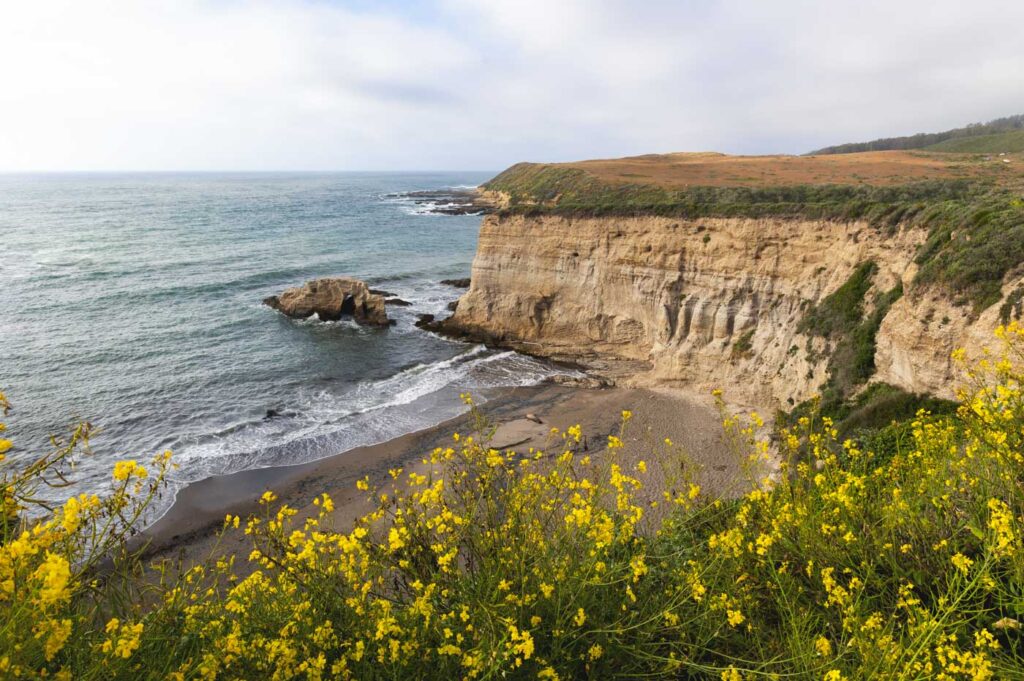
The park holds profound cultural and historical significance, deeply intertwined with the Chumash people, who inhabited the region for thousands of years. Archaeological evidence suggests that the Chumash utilized the area for shellfish harvesting, hunting, and seasonal gatherings, with Morro Rock serving as a navigational landmark. European exploration began in the 16th century, with Spanish missionaries and settlers documenting the region’s natural beauty. The name "Montaña de Oro" (Spanish for "Mountain of Gold") originates from early explorers who marveled at the golden hues of the coastal bluffs during sunset. In local folklore, the park is also associated with shipwrecks and ghost stories, including tales of the SS Monterey wreck near Morro Bay, which drew visitors to the rugged coastline.
Ecologically, Montaña de Oro stands out among California’s coastal parks due to its unique blend of habitats, including coastal sage scrub, dune systems, estuaries, and riparian zones. Unlike Pfeiffer Big Sur State Park, which dominates with redwood forests and rugged cliffs, or Torrey Pines State Natural Reserve, known for its iconic pines and rocky shorelines, Montaña de Oro’s dune fields and wetlands create a distinct Mediterranean-climate ecosystem. Its estuarine habitats support over 200 bird species, while the dune systems harbor rare plant species like the San Luis Obispo least tern (Sternula antillarum brownii), a federally endangered subspecies. The park’s elevation ranges from sea level to 1,000 feet (300 meters), with coastal bluffs reaching up to 500 feet (150 meters), providing diverse microclimates that sustain biodiversity.
The following table compares Montaña de Oro’s key features with three other prominent California coastal state parks, emphasizing their ecological and geographical distinctions:
| Feature | Montaña de Oro State Park | Pfeiffer Big Sur State Park | Point Lobos State Natural Reserve | Torrey Pines State Natural Reserve |
|---|---|---|---|---|
| Location | San Luis Obispo County, Central Coast | Monterey County, Big Sur | San Luis Obispo County, near Carmel | San Diego County, La Jolla |
| Size (acres) | 7,500 | 21,000 | 1,000 | 1,745 |
| Elevation Range | Sea level – 1,000 ft (300 m) | Sea level – 2,600 ft (790 m) | Sea level – 1,000 ft (300 m) | Sea level – 760 ft (230 m) |
| Primary Habitats | Coastal dunes, wetlands, sage scrub, riparian zones | Redwood forests, coastal cliffs, grasslands | Rocky shorelines, tide pools, kelp forests | Coastal sage scrub, chaparral, bluffs |
| Endemic/Endangered Species | San Luis Obispo least tern, California gnatcatcher, western snowy plover | Marbled murrelet, California red-legged frog | Tidewater goby, California sea lion | Torrey pine (Pinus torreyana), least Bell’s vireo |
| Key Conservation Designations | National Natural Landmark (1984), Ramsar Wetland (1999) | UNESCO Biosphere Reserve (1976) | State Natural Reserve (1966) | State Natural Reserve (1973) |
| Annual Visitors (Est.) | 150,000–200,000 | 500,000+ | 300,000+ | 250,000+ |
Montaña de Oro’s conservation timeline reflects a collaborative effort between government agencies, non-profits, and scientific institutions. Below is a structured timeline of key milestones:
1970s–1980s: Early Recognition and Protection
1978: The California Coastal Commission identifies Montaña de Oro’s dunes as a critical habitat. 1984: Designated a National Natural Landmark for its rare dune ecosystems.
1990s: Expansion and Scientific Research
1990: Established as the Montaña de Oro Ecological Reserve under California State Parks. 1992: The Nature Conservancy begins habitat restoration projects. 1999: Recognized as a Ramsar Wetland of International Importance for migratory bird habitats.
2000s–Present: Restoration and Community Engagement
2002: Officially designated as Montaña de Oro State Park. 2005: U.S. Fish and Wildlife Service lists the San Luis Obispo least tern as federally endangered, prompting habitat protection efforts. 2010: Partnership with the Morro Bay National Estuary Program to monitor water quality and restore estuarine habitats. 2015: Park boundaries expanded to include additional coastal bluffs and wetlands. 2018: Launch of the Montaña de Oro Trail as part of a $5 million restoration and trail project. 2020–Present: Ongoing invasive species eradication (e.g., iceplant, European rabbits) and native plant replanting initiatives.
The park’s geographical isolation and microclimates contribute to its ecological uniqueness. Unlike Point Lobos, which is dominated by rocky intertidal zones, or Torrey Pines, known for its sandy bluffs and coastal sage, Montaña de Oro’s dune systems and est
Montaña de Oro State Park stands as more than a destination; it is a testament to the delicate balance between human curiosity and ecological protection. Whether you re chasing the golden-hour glow over Morro Bay, tracking the flight of a peregrine falcon along the cliffs, or simply pressing your hands into the warm sand of a restored dune, every experience here reinforces a simple truth: the coast s future depends on our choices today. As invasive species retreat and native plants reclaim their dominance, the park s success offers a blueprint for conservation worldwide—one that invites visitors to leave not just footprints, but a legacy of care for the wild landscapes that sustain us all.
Leave a Comment
Comments are moderated before appearing. The data you submit is processed according to the Privacy Policy of Vetlife Archive.